

The most beautiful outdoor spaces share a quality that is easy to recognize but harder to define: everything feels like it belongs together. Patios flow naturally into garden beds. Walkways lead the eye toward focal points without interrupting the planting around them. Retaining walls feel like a deliberate part of the landscape rather than a structural necessity that was dropped into an afterthought.
At Bret-Mar Landscape, Inc., this sense of cohesion is something we design intentionally in every project we take on. Creating seamless transitions between hardscaping and softscaping is one of the most important and nuanced skills in landscape architecture. It is what separates a truly integrated outdoor environment from a collection of unrelated elements that happen to share the same yard.
Understanding the Difference Between Hardscaping and Softscaping
Before addressing how to blend them effectively, it helps to understand what each term refers to and what role each plays in the overall landscape design.
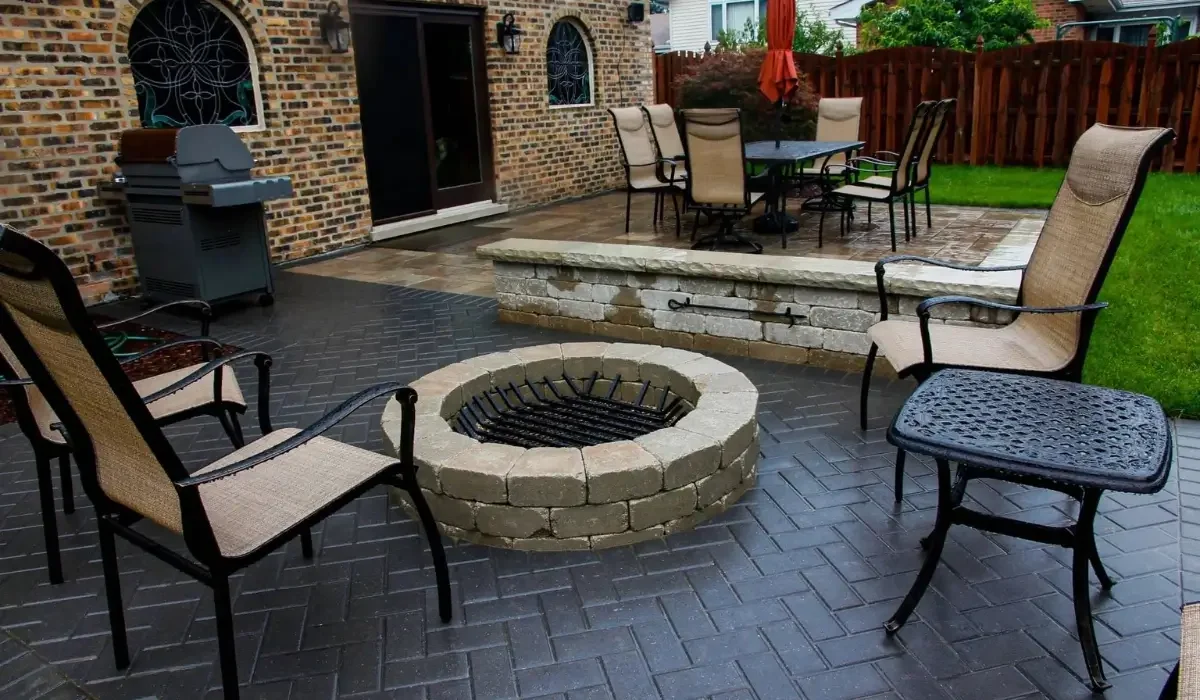
Hardscaping refers to the permanent, non-plant structural elements of a landscape. This includes patios, walkways, driveways, retaining walls, garden borders, steps, outdoor kitchens, fire features, and water features. These elements provide the architectural backbone of the outdoor space, defining how it is organized, how people move through it, and how it functions in practical terms.
Softscaping refers to the living, horticultural elements of the landscape. This includes trees, shrubs, perennials, annuals, ornamental grasses, groundcovers, and lawn areas. Softscaping brings color, texture, seasonal change, and biological life to the space, softening the structural character of the hardscape and connecting the built environment to the natural world around it.
Why the Transition Between the Two Matters
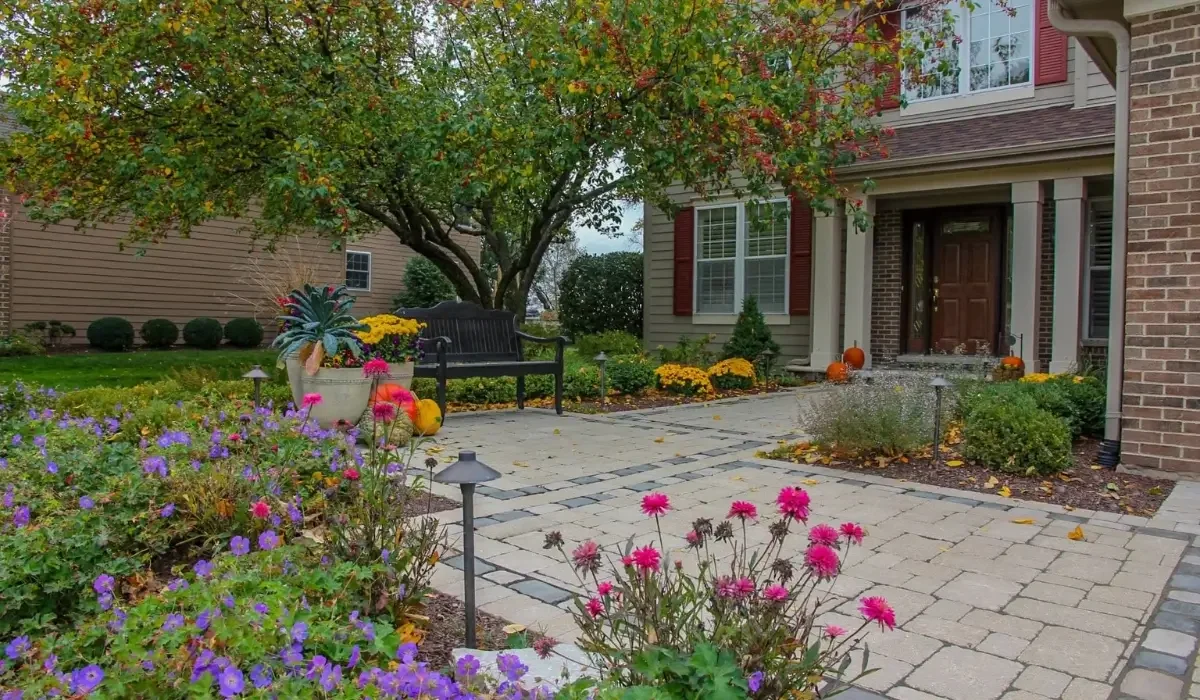
The edge where hardscaping ends and softscaping begins is where many landscape designs either succeed or fall apart visually. A clean, thoughtfully designed transition makes both elements look better. It creates a sense of intentionality and craft that elevates the entire space. A poorly handled transition, with an abrupt edge, conflicting materials, or a planting scheme that ignores the adjacent hardscape, creates visual tension that diminishes even high-quality individual components.
Related: Seasonal Landscaping Tips for Year-Round Curb Appeal
Design Principles for Seamless Hardscape to Softscape Transitions
At Bret-Mar Landscape, Inc., our licensed landscape architects approach the hardscape-to-softscape transition with a set of design principles that have been refined across more than 40 years of creating luxury outdoor environments for homeowners throughout Homer Glen, Orland Park, Naperville, Lemont, Frankfort, and communities across the Midwest.
Use Material and Color Continuity to Create Visual Flow
One of the most effective ways to create a seamless transition between hardscape and softscape is to select materials and plants that share a common color palette or textural quality. A warm-toned natural stone patio pairs naturally with plants that feature warm foliage colors, bronze ornamental grasses, copper-toned heucheras, or golden conifers that echo the tones of the stone. A cool-grey concrete or bluestone surface is complemented by plants with silver or blue-grey foliage, such as Russian sage, blue fescue, or silvery lamb's ear.
This material and color continuity does not have to be literal or matching. It should feel harmonious, as if the designer considered the relationship between the built surface and the living plants from the very beginning, which at Bret-Mar Landscape, Inc., we always do.
Design Planting Beds That Reference the Geometry of the Hardscape
The shape and layout of planting beds adjacent to hardscape features should respond to the geometry of those features rather than ignoring them. A rectangular patio with clean modern lines is best complemented by planting beds with defined, crisp edges that echo the geometry of the paving. A curved, naturalistic patio or walkway calls for softly flowing planting beds with organic shapes that reinforce the fluid character of the hardscape.
When planting beds are designed in relationship to adjacent hardscape, the two elements feel like parts of a unified composition rather than separate projects installed by different hands. This is particularly important at the edges of patios, along retaining walls, and at the borders of walkways, where the transition zone is most visible and most impactful.
Related: How to Design a Luxury Landscape That Balances Beauty and Function
Use Transitional Plants to Bridge the Gap
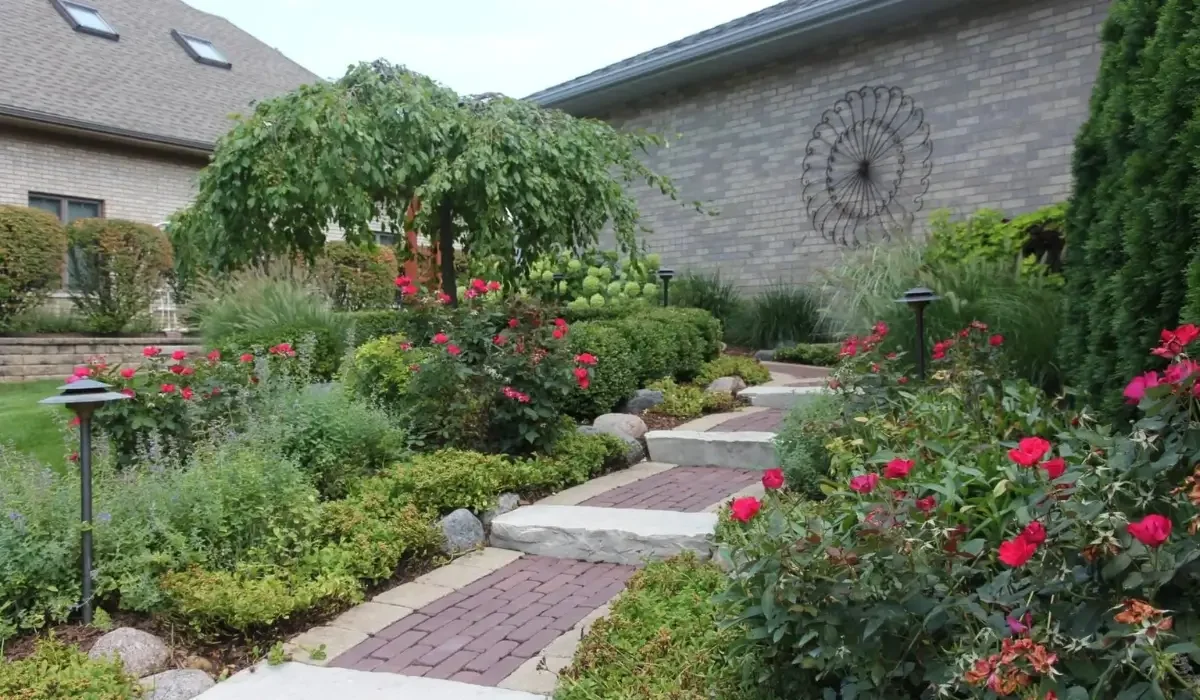
Certain plant types function particularly well as visual bridges between hard and soft elements. Low-growing groundcovers allow the plants to spill slightly over the edge of a paver or natural stone surface to soften the boundary without obscuring it. Ornamental grasses planted near retaining walls add movement and organic texture that contrasts beautifully with the solidity of the stone or concrete. Creeping thyme, sedum, or other low mat-forming plants established in the joints of flagstone paths blur the line between paving and planting in a way that feels natural and intentional.
These transitional plants are one of our most useful design tools at Bret-Mar Landscape, Inc. when creating a cohesive landscape that moves gracefully between its structural and horticultural elements.
Layer Plant Heights From the Hardscape Outward
The way plants are layered in height as they move away from a hardscape element significantly affects how natural the transition feels. Starting with low-growing plants immediately adjacent to the patio or walkway edge and stepping up gradually through medium-height perennials and shrubs to larger specimen plants or trees in the background creates a sense of depth and progression that draws the eye into the landscape rather than stopping it at the hardscape boundary.
This layering principle is a foundational element of the planting design approach our licensed landscape architects use across every residential project, from single-family homes in Homer Glen to luxury estate landscapes in Burr Ridge and Darien.
Related: Hardscaping Essentials: Patios, Walkways, and Retaining Walls Explained
Hardscaping and Softscaping Services at Bret-Mar Landscape, Inc.
Bret-Mar Landscape, Inc. is a second-generation, family-owned landscape architecture firm with over 40 years of experience designing and building luxury outdoor environments for homeowners across the Midwest. Our services span the full spectrum of hardscape and softscape design and installation, including custom patio design and construction, natural stone and paver walkways, retaining wall installation, planting design and installation, seasonal color programs, lawn installation, and complete outdoor living space design that integrates hardscape and softscape elements into a unified, functional, and beautiful whole.
Every project begins with a design consultation in which our licensed landscape architects take the time to understand the property, the homeowner's lifestyle, and the aesthetic vision before a single line is drawn. That process is what produces the kind of outdoor environments our clients are proud to show off and our team is proud to have built.
If you are ready to create an outdoor space where hardscape and softscape work together seamlessly, we invite you to schedule a design consultation at https://www.bretmarlandscape.com. We serve homeowners in Homer Glen, Orland Park, Lemont, Naperville, Frankfort, Darien, Burr Ridge, Tinley Park, and surrounding communities throughout the Midwest.
