

How to Maintain Patios, Walkways, and Driveways for Long-Term Durability
A well-built patio, walkway, or driveway is one of the most significant investments you can make in your property. When hardscaping is designed and installed correctly, it should last for decades. But even the highest-quality materials installed by the most skilled craftsmen need routine attention to perform at their best over the long term.
At Bret-Mar Landscape, Inc., we have been designing and building hardscape features for homeowners across Homer Glen, Orland Park, Naperville, and the broader Chicagoland area since 1985. Over four decades, we have seen firsthand what separates hardscaping that looks beautiful and performs flawlessly for twenty or thirty years from work that starts showing its age within a few seasons. A significant part of that difference comes down to how well the surfaces are maintained after installation.
This guide covers the most important maintenance practices for patios, walkways, and driveways, and explains how to protect the investment you have made in your outdoor spaces for the long term.
Why Hardscape Maintenance Matters More in the Midwest
Chicagoland homeowners face one of the most demanding climates for outdoor hardscape in the country. Freeze-thaw cycles, heavy snow loads, road salt exposure, and the compressive stress of warm summers followed by hard winters place real and repeated stress on paving materials. Concrete, natural stone, brick pavers, and other hardscape surfaces are engineered to withstand these conditions, but only when they are properly maintained and addressed promptly when minor issues appear.
The cost of proactive maintenance is consistently far lower than the cost of reactive repair. Addressing a small crack, a shifted paver, or a drainage issue early typically involves straightforward intervention. Waiting until those minor issues compound into structural problems, widespread settling, or surface failure requires significantly more extensive and expensive work to resolve.
Related: The Role of Landscape Architecture in High-End Outdoor Design
Maintaining Brick Paver Patios and Walkways
Brick pavers are among the most popular hardscaping materials for patios and walkways in the Chicagoland region, and with good reason. Their modular nature makes them relatively forgiving to maintain compared to poured concrete, and when properly cared for, they hold their appearance and structural integrity for generations.
Polymeric Sand Replenishment
The joints between pavers are filled with polymeric sand, a specially formulated material that binds when activated with water and helps lock pavers in position while resisting weed growth and insect intrusion. Over time, polymeric sand can erode through heavy rain, foot traffic, and the repeated freeze-thaw cycles common to Illinois winters.
Inspecting your paver joints annually and replenishing sand where gaps or erosion have developed is one of the most important maintenance tasks for a brick paver surface. Empty joints allow pavers to shift and wobble underfoot, which accelerates wear, creates trip hazards, and allows weeds to establish. Catching and addressing this early keeps your paver surface stable and looking intentional.
Releveling Shifted or Sunken Pavers
Pavers that have shifted, sunken, or become uneven should be releveled promptly. A small area of settlement left unaddressed tends to grow as adjacent pavers are affected by the instability. In most cases, individual pavers or small sections can be carefully removed, the base material adjusted, and the pavers reset without disturbing the broader installation.
At Bret-Mar, our two-year base warranty on hardscape reflects our commitment to quality installation, and our team is available to assess and address any settling that occurs within the warranty period. Beyond the warranty, periodic professional inspection is a worthwhile investment for high-use surfaces.
Sealing Brick Pavers
Sealing your brick paver surfaces every few years provides meaningful protection against staining, color fading, and moisture penetration that contributes to freeze-thaw damage. A quality sealer also enhances the color of the pavers and makes routine cleaning significantly easier. We recommend using a sealer rated for Midwest freeze-thaw conditions and applying it after thoroughly cleaning the surface and allowing it to dry completely.
Related: Choosing the Right Materials for Long-Lasting Walkways and Driveways
Maintaining Natural Stone Walkways and Patios
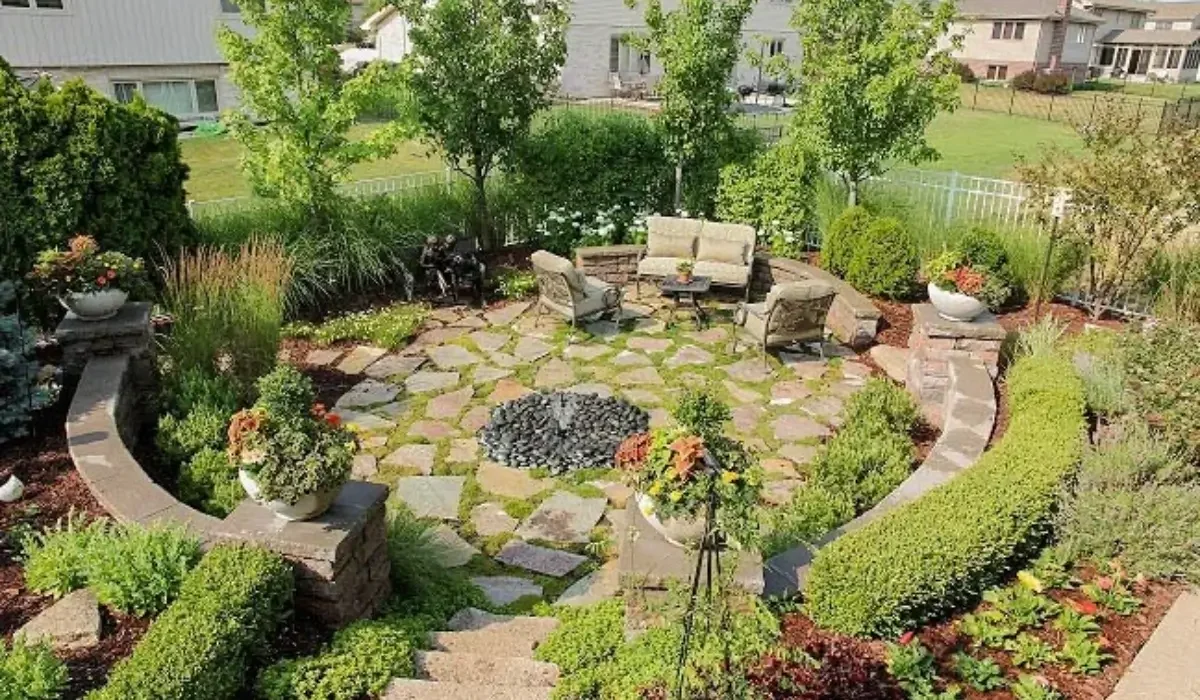
Natural stone, including bluestone, flagstone, and limestone, brings a timeless elegance to outdoor living spaces and tends to be extremely durable when properly cared for.
Managing Moss, Algae, and Organic Growth
In shaded or moist areas, natural stone is susceptible to moss, algae, and lichen growth that makes surfaces slippery and can, over time, penetrate the stone surface and cause spalling or discoloration. Cleaning stone surfaces with a diluted solution appropriate to the stone type and applying a mold and mildew inhibitor in problem areas keeps organic growth in check without damaging the material.
Avoid using pressure washers at high settings on natural stone, as the force can damage surface texture and dislodge jointing material. A moderate setting with appropriate cleaning solutions is more effective and far gentler on the stone.
Inspecting and Repointing Mortar Joints
For natural stone surfaces set in mortar rather than sand, the mortar joints should be inspected annually for cracking, crumbling, or gaps. Deteriorated mortar allows moisture to penetrate below the stone, which can destabilize the surface and cause significant damage through repeated freeze-thaw cycles. Repointing joints where mortar has failed is straightforward when addressed early and becomes a much more involved project when structural damage has developed beneath the surface.
Maintaining Concrete Driveways and Walkways
Concrete is valued for its strength and longevity, but it is also susceptible to specific types of damage that benefit from proactive care.
Crack Sealing and Concrete Repair
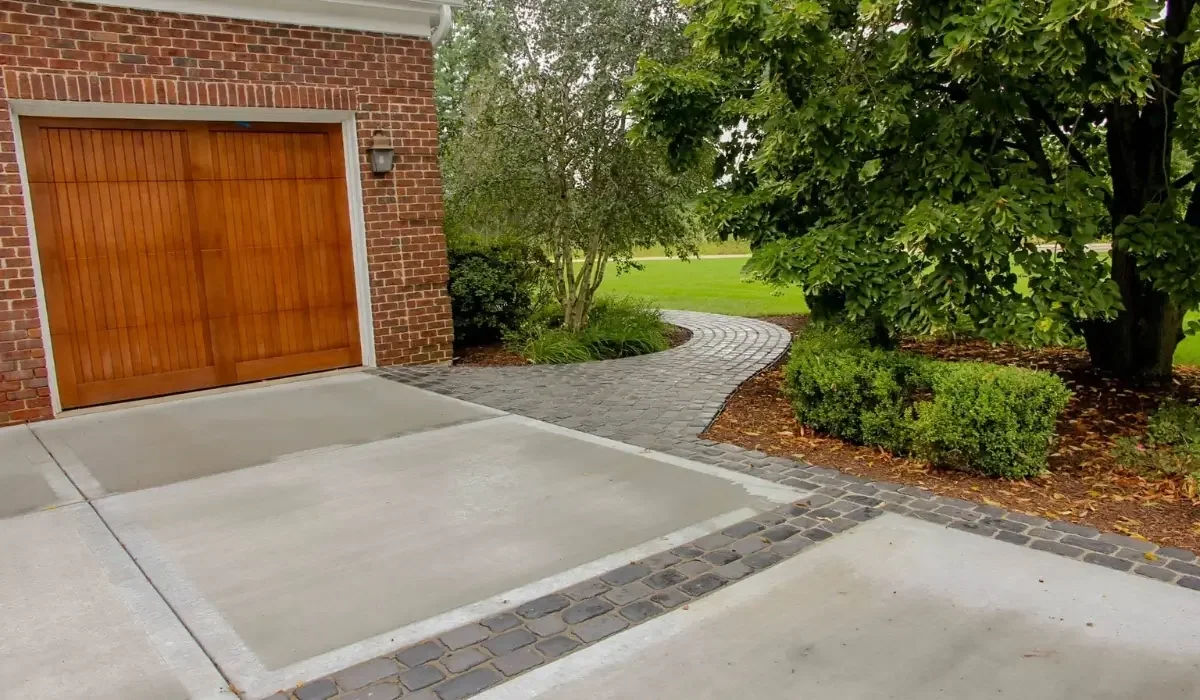
Small cracks in concrete surfaces should be sealed promptly with an appropriate concrete caulk or filler before water infiltration allows them to widen through freeze-thaw expansion. Once a crack reaches a certain width, it can no longer be addressed with simple sealing and may require grinding, patching, or section replacement to restore a stable, even surface.
Avoiding deicing salts directly on concrete driveways and walkways is one of the most important long-term care practices for concrete. Salt accelerates the surface scaling and spalling that degrades the appearance and integrity of concrete over time. Sand provides traction in icy conditions without the chemical damage that salt causes to concrete surfaces.
Concrete Sealing
Like brick pavers, concrete surfaces benefit from periodic sealing to reduce moisture penetration, resist staining from oil and organic material, and slow the surface scaling that Midwest winters accelerate. A penetrating sealer applied every few years on clean, dry concrete provides meaningful protection and extends the effective life of the surface.
Related: Hardscaping Essentials: Patios, Walkways, and Retaining Walls Explained
How the Right Installation Sets Up Long-Term Success
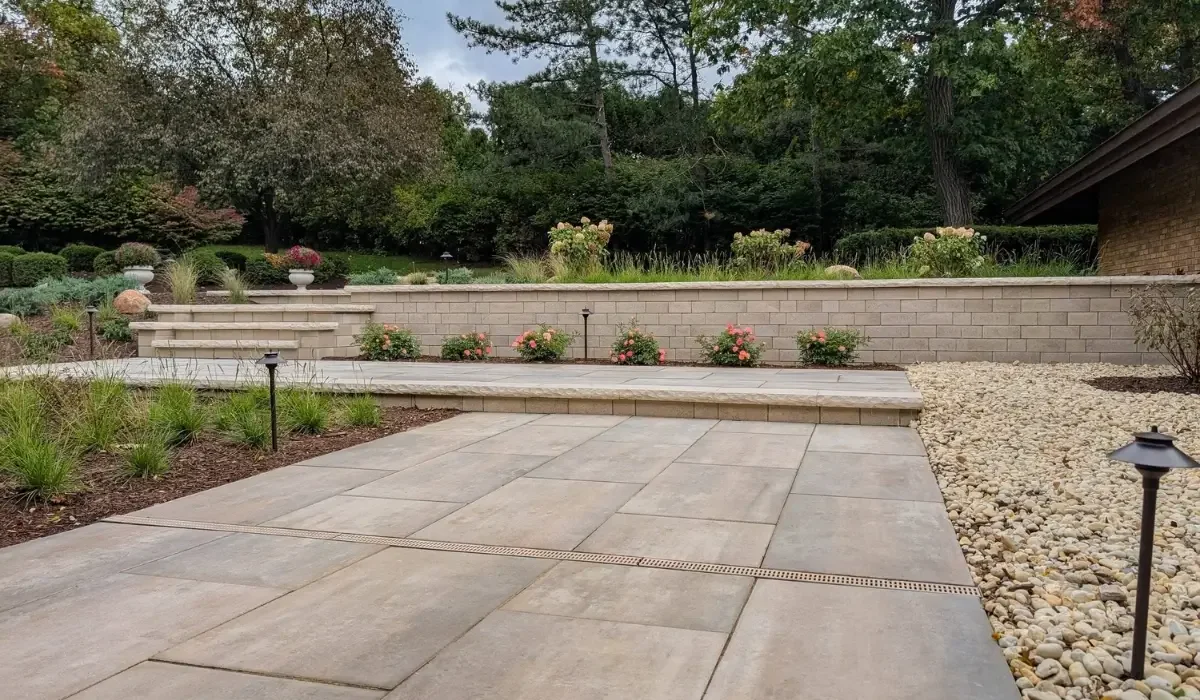
The single most important factor in long-term hardscape durability is the quality of the base system beneath the surface. At Bret-Mar, every patio, walkway, and driveway we build is constructed on a properly engineered base designed for Midwest freeze-thaw conditions using high-quality materials from trusted suppliers. A surface installed on a solid, well-draining base is dramatically less prone to the settling, cracking, and heaving that plague hardscape built with shortcuts.
We are proud to be a Unilock Authorized Contractor, which reflects our commitment to meeting rigorous installation standards that support both the performance and warranty of the products we install.
Hardscape Design, Installation, and Ongoing Care With Bret-Mar Landscape
At Bret-Mar Landscape, Inc., we design, build, and maintain outdoor environments for discerning homeowners across Chicagoland. Our licensed landscape architects approach every hardscape project with the same rigor and long-term thinking they bring to the plantings and overall landscape design, ensuring that patios, walkways, and driveways perform beautifully alongside the living elements of your property.
Beyond installation, our fine garden maintenance programs provide season-by-season care that keeps the full scope of your outdoor environment looking intentional and well-tended throughout the year. All consultations are free, and we serve homeowners throughout Homer Glen, Orland Park, Lemont, Naperville, Burr Ridge, Frankfort, and surrounding communities.
Contact Bret-Mar Landscape today to schedule your free consultation and discuss how we can help you protect and extend the life of your hardscape investment.
